In CS2, economy gives as many rounds as aim. Sometimes the right decision is not to buy a gun, but to save money for the next round. If one team is making a full buy and the others are holding back, the plan will be disrupted before the round starts. Knowing economics means managing the team's match rhythm rather than individual scores.
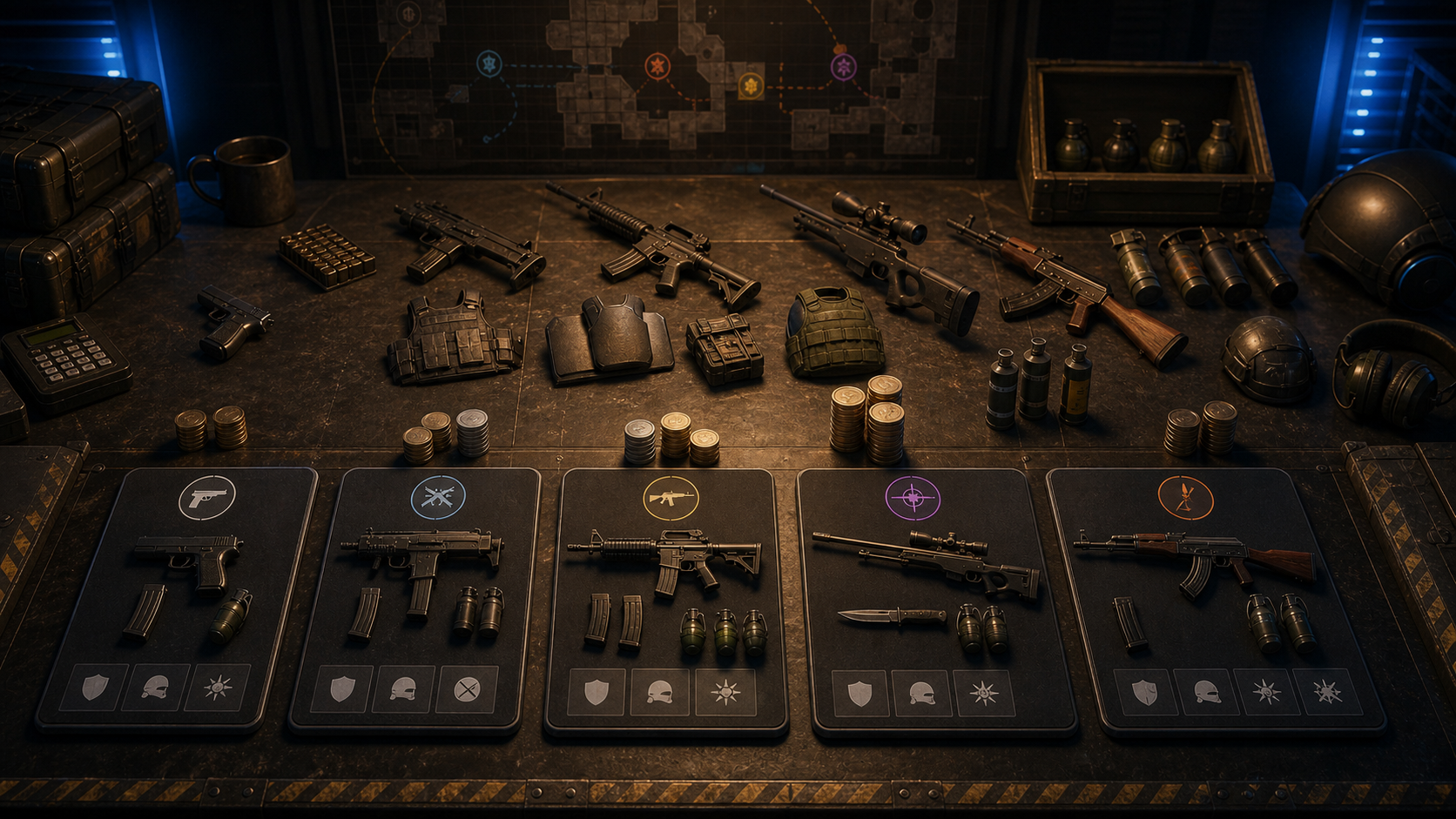
Beginner players generally buy weapons every round they can afford. However, in CS2, every purchasing decision affects the next round. Therefore, it is necessary to clearly distinguish the concepts of eco, force, half buy, full buy and save.
Basic Purchasing Types
| Decision | When? | Purpose |
|---|---|---|
| Full Buy | If the team has money to buy rifles, armor and utilities | Playing the round strongly. |
| eco | If money is too low | Prepare the next round full buy. |
| Force Buy | If the money is low but the round is critical | Taking risks and trying to turn the match. |
| Half Buy | Buy some equipment and save money | Both to create chances and protect the next round. |
| Save | If the probability of winning a round is low | Maintain weapon and utility value. |
These decisions should be made based on the total situation of the team, not on a single person's money.
Think in Team Money
In CS2 economics, "I have money" is not a sufficient answer. If four players have low money and you are buying AK alone, the team plan will be incompatible. Likewise, when everyone can full buy, your unnecessary eco stay reduces the round power.
Make a short economy call before the round starts:
Let's half-buy this round, then full-buy next.Even such a simple sentence prevents the team from making messy shopping.
When Does Force Buy Make Sense?
Force buy is not a decision to be made at every low money. The match score, the opponent's economy, what will happen in the next round if you lose, and the advantage of the side at hand should be considered together.
Force buy may make sense in these situations:
- If the opponent's economy is also weak.
- If the last rounds of the match are approaching.
- If you lose, you will fall into a bad economy anyway.
- If you have a plan to play strong with low equipment on the map.
- If the team decided together.
A single person saying "I'm taking force" is not an economic plan.
Save Decision
Saving is not cowardice. In a 2v5 situation, storing AWP, armor and utility can win the next round. Especially on the CT side, expensive weapons and kit values are high.
Ask these questions when deciding to save:
- Is the bomb set?
- Is there a kit and utility?
- Are opponent positions known?
- If we keep the gun, will the next round be a full buy?
- Is it safe to buy a debut trailer?
Unnecessary heroism can ruin the team economy.
Drop Culture
Throwing a gun at your teammate is not just politeness, it's economic management. The player with more money can leave a rifle to the entry or anchor player with less money. Thus, the total strength of the team increases.
However, do not leave yourself completely helpless when giving drops. Buying a rifle is good, but it may be difficult to get a site without smoke and flash.
CT and T Side Difference
On the CT side, equipment generally feels more expensive. The need for deuse kits, smoke and molotovs strains the economy. Therefore, losing unnecessary weapons on the CT side may have more severe consequences. On the T side, the balance of EC and utility determines the quality of the plan.
Also consider tool economics when purchasing an AWP. If the player receiving AWP dies, not only the money but also the round plan is affected. If AWP does not have enough support flash and withdrawal plan along with it, the investment may go in vain.
Anti-Eco Playing
If the opponent is in eco, the round is not free. Watch out for the possibility of close range pistols, shotguns or stacks. Entering a narrow corridor one by one can give the opponent a weapon. In anti-eco rounds, it is important to proceed together, keep distance and avoid unnecessary duels.
The economy advantage turns into an advantage only if played cleanly.
Conclusion
The CS2 economy guide is actually a team rhythm guide. If you consider eco, force, half buy, full buy and save decisions together, control of the match will be less dispersed.
The best economic decision is not always to buy the most expensive gun. Sometimes admitting to losing the right round is the beginning of winning the next two rounds.