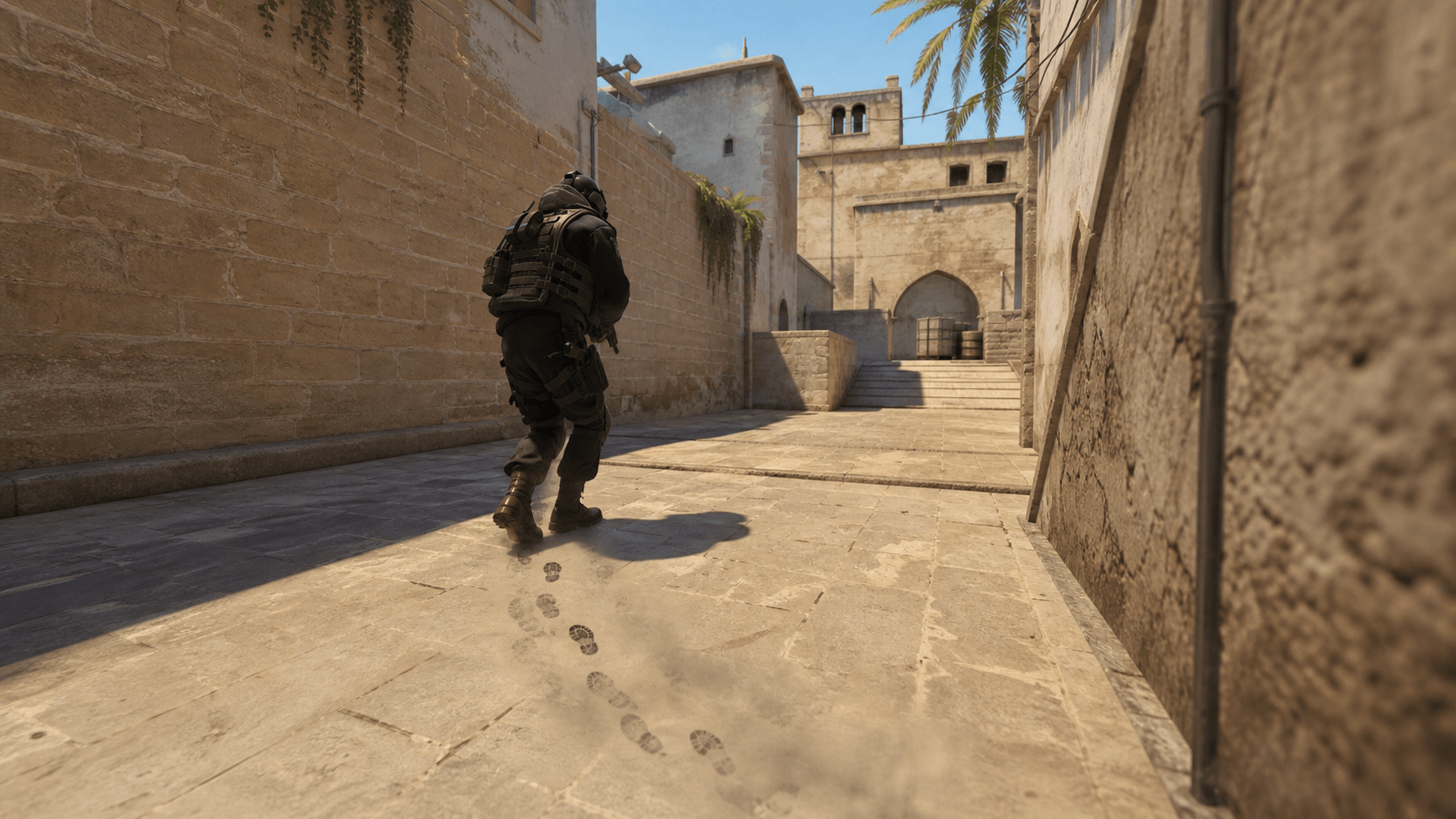
In CS2, sound is one of the most important sources of information before you see an opponent. An unnecessary footstep can reveal your rotation, flank attempt, or site-entry timing far too early.
Moving silently is not simply a matter of holding Shift. You need to know when to run, when to slow down, how to control the landing sound after a jump, and sometimes how to use sound deliberately.
Why Is Sound Control Important?
Running, jumping, falling from a height, using ladders, reloading, and interacting with the bomb can all give your opponent information in CS2. Good players therefore manage rounds not only with their aim, but also by controlling how much sound they make.
| Movement | Sound risk | When to use it |
|---|---|---|
| Running | High | To build tempo and cross safe areas quickly. |
| Shift walking | Low | To conceal your position over the final few meters. |
| Crouch walking | Very low | To reposition over a short distance. |
| Jumping/drop | High | Avoid unnecessary use and consider the landing sound. |
| Reloading | Situationally risky | It can give the opponent a window to attack. |
The goal is not to remain silent for the entire round. Playing too slowly can also disrupt your team's timing. The best movement discipline is to move quickly through safe areas and eliminate sound as you approach a dangerous angle.
When Should You Shift Walk?
Walking with Shift is the most basic tool for silent movement in CS2. It is particularly valuable in areas where an opponent could hear you but cannot see you yet.
Situations in which you should Shift walk:
- During the final few meters before entering a site.
- When flanking behind an opponent.
- When crossing an exposed sound line during a rotation.
- When you want to disrupt an opponent's angle hold in a clutch.
- To avoid giving away information early while your team prepares an execute.
Holding Shift constantly is not the right approach. Walking slowly through an open area where your opponent will already see you simply makes you an easy target. Run first to save time, then switch to silent movement as you approach the dangerous area.
Crouch Walking and Clearing Corners
Crouch walking is slower than Shift walking, but provides more controlled movement. It is useful for changing angles at very close range, moving your position a few steps in an afterplant situation, or taking a low peek that the opponent does not expect.
However, crouch walking around every corner is also a mistake. Because you move so slowly, it becomes difficult to react if an opponent catches you with a wide swing. Crouch walking should therefore be reserved mainly for small positional adjustments.
Jump, Drop, and Ladder Sounds
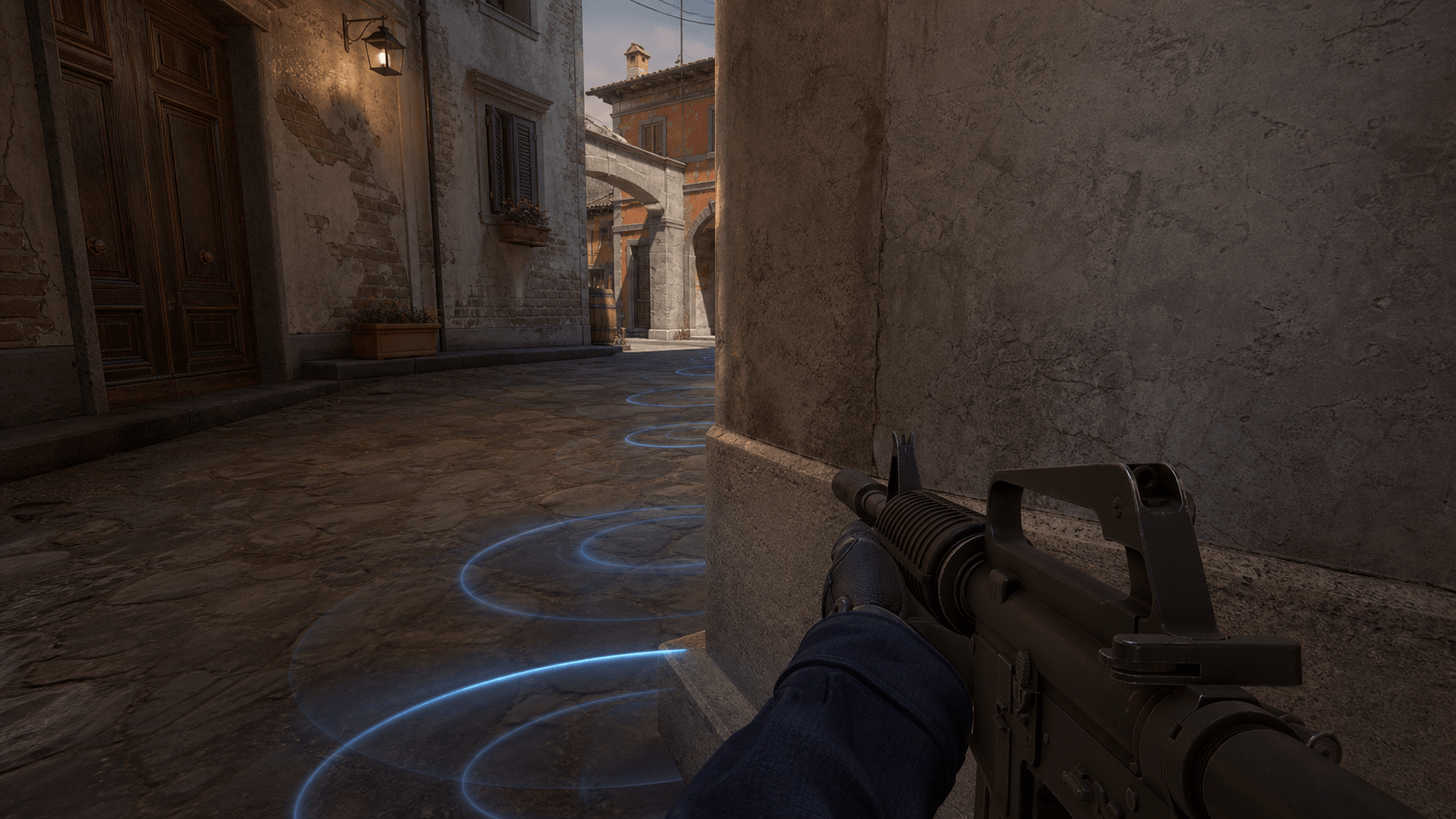
Walking silently only to jump and land heavily at the last moment can ruin all your stealth. Landing sounds often provide more information than normal footsteps in CS2. This can expose the round, especially in areas with changes in elevation such as Mirage apartments, Dust2 short, Nuke ramp, or Vertigo.
When descending from a small height, pressing Shift immediately before touching the ground can help reduce the landing sound. However, this is not a magic solution that works at every height. You should expect opponents to hear larger drops.
Ladders, metal surfaces, wooden floors, and breakable objects also require special care. Even if your movement itself is silent, the surface you touch may reveal information to the opponent.
Cutting Off the Final Step
When you stop suddenly after running, the final footstep sound may continue briefly. Some players therefore use a quick crouch tap immediately before settling into an angle to stop their movement more cleanly.
A practice sequence could look like this:
- Run through the safe area.
- Switch to Shift as you approach the dangerous zone.
- Release all movement keys as you take your position.
- If necessary, tap Ctrl briefly to cut off the sensation of the final step.
- Wait a moment and listen for your opponent before holding the angle.
This technique may seem minor, but it can make a difference in clutch situations. If the opponent hears your final step, they can place their crosshair exactly where you are about to appear.
Using Sound Fakes
Using sound deliberately can be just as important as remaining silent. Sometimes giving an opponent false information is more valuable than making no sound at all.
Simple sound fakes you can use include:
- Run in one direction, then change your route while holding Shift.
- Make a short reload sound and wait for the opponent to push aggressively.
- Begin planting the bomb and immediately change position.
- Use a decoy to draw the opponent's attention elsewhere.
- Make running sounds in one area while your team enters from the other side.
Overusing sound fakes can backfire. A disciplined opponent may not immediately believe every sound. Fake audio becomes more powerful when coordinated with your team's timing and utility.
Silent Movement on Different Maps
Sound is not read the same way on every map. It can sometimes be difficult to identify where a sound originated in areas such as Mirage apartments, Inferno banana, the upper and lower levels of Nuke, or Vertigo ramp.
Map knowledge is therefore part of silent movement. Simply holding Shift is not enough if you do not know where an opponent might hear you from.
| Map situation | What to consider |
|---|---|
| Apartments and tight corridors | Running over the final meters gives away early information. |
| Areas with ladders | Surface sounds can reveal your position. |
| Afterplant | Crouch walking is useful for small repositioning moves. |
| Retake | Moving unnecessarily slowly can run down the clock. |
| Flank | Using Shift at the right time can open the opponent's back. |
Common Mistakes
The most common mistake when learning silent movement is trying to solve every problem by holding Shift. This kills your tempo and can leave you far behind while your teammates enter the site.
Mistakes to avoid:
- Shift walking for the entire round.
- Jumping at the last moment during a site entry and making a landing sound.
- Giving the opponent free information with a reload sound.
- Failing to account for ladder or metal surface sounds.
- Making a decision after hearing something without checking the radar, time, and team positions.
Silence alone does not win a round. You need to accelerate at the right time, eliminate sound at the right time, and turn the information you hear into a team decision.
Practice Routine
Improving silent movement does not require lengthy training sessions like aim botz. Even a brief practice session in a private lobby on a few maps can make a difference.
A simple practice sequence:
- Choose an area where sound matters, such as Mirage apartments or Inferno banana.
- Follow the same route once while running and once while holding Shift.
- Test the landing sound at small drop points.
- Practice arriving at an angle from a run and cutting off the final step.
- If you have a friend, ask them to wait on the other side and tell you which sounds they can hear.
This exercise will help you answer the question, "Will they hear me if I run here?" more quickly during a match.
Conclusion
Moving silently in CS2 does not mean playing slowly. A good player moves quickly in safe areas, cuts off sound wherever it would give the opponent information, and uses sound as a fake when necessary.
When Shift walking, crouch walking, landing-sound control, and final-step control work together, you give your opponent less information. The most valuable goal is not to remain silent, but to avoid being heard at the right moment.