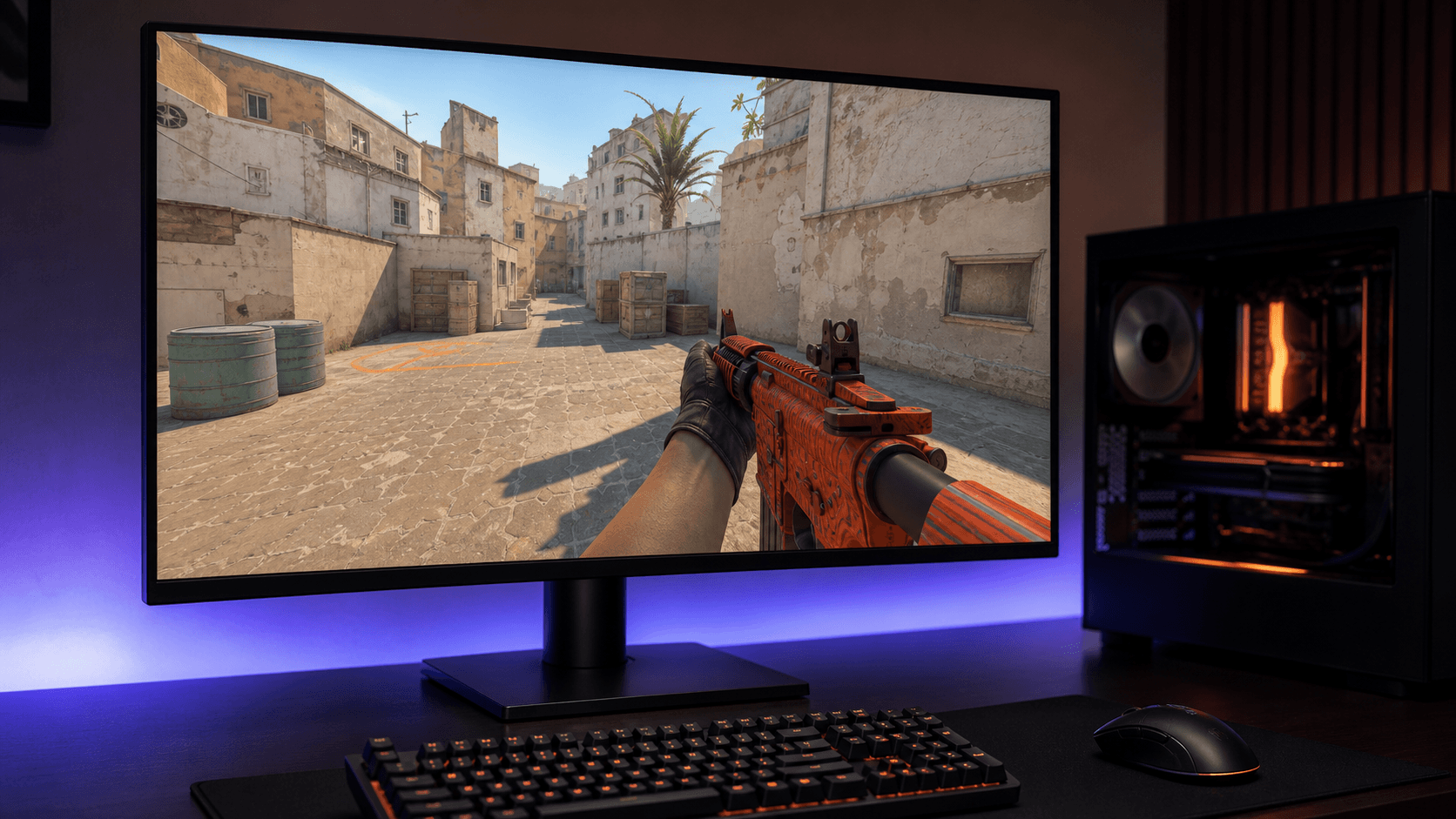
CS2 monitor settings are just as important as in-game graphics settings. Brightness, contrast, vibrance, and motion clarity can affect how quickly you identify an enemy model.
Every monitor is different, so you should test settings on your own panel instead of relying on one universal preset.
Visibility Settings
Vibrance and contrast can help separate an enemy model from the background. However, excessively vivid colors may cause eye fatigue during long matches. Brightness should also be adjusted according to the lighting in your room.
| Setting | What to Check |
|---|---|
| Brightness | Dark corners should be visible without blowing out highlights. |
| Contrast | Player models should stand out from the background. |
| Vibrance | Color intensity should not strain your eyes. |
| Sharpness | Excessive sharpness can make the image look artificial. |
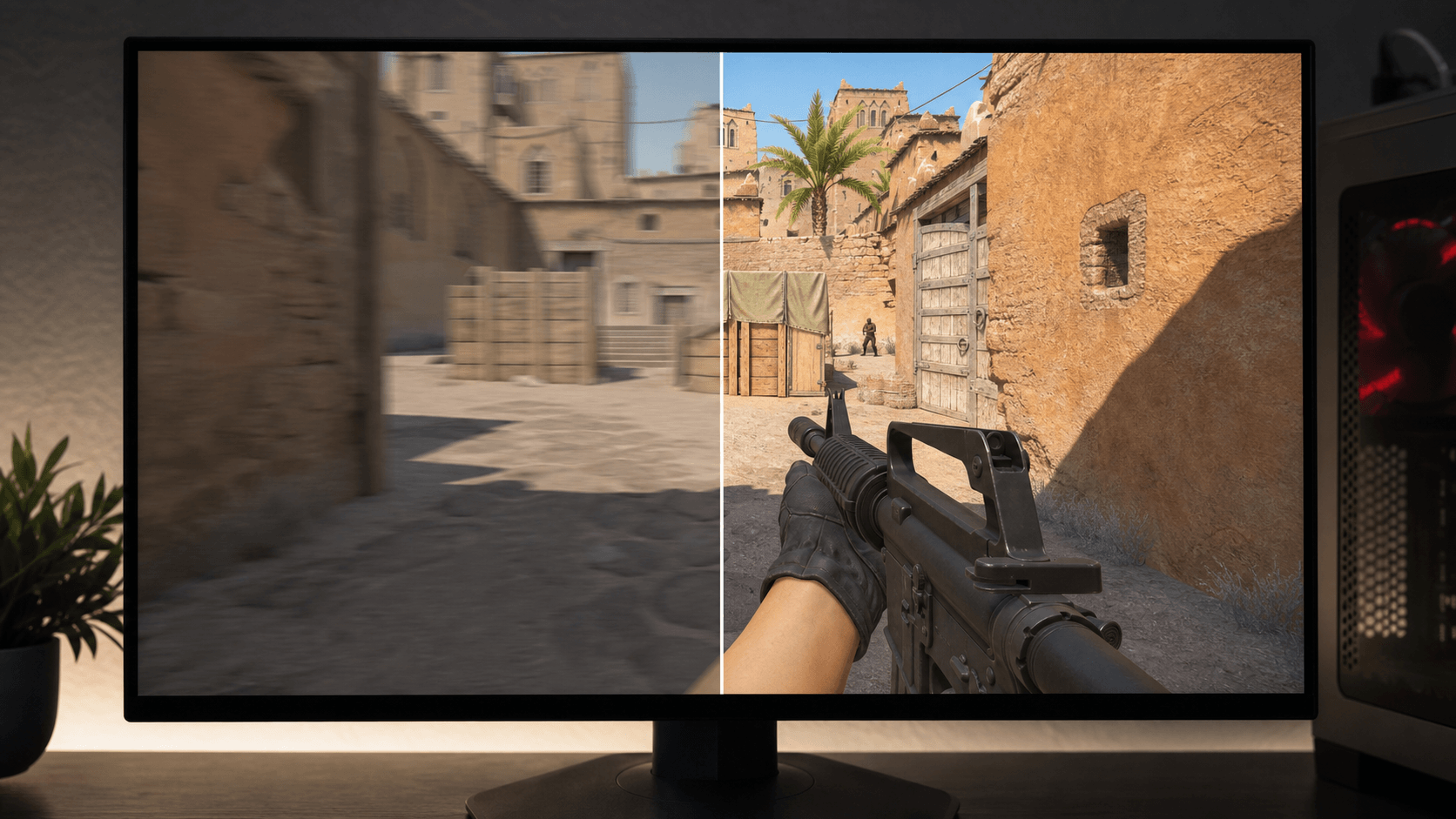
DyAc and Blur Reduction
ZOWIE DyAc and blur-reduction technologies on other monitors can improve motion clarity. The image may feel clearer during sprays and fast peeks in particular. However, the loss of brightness or perceived flicker can be uncomfortable for some players.
Test these features both on and off in Deathmatch. Do not make a decision based only on how the desktop looks.
Map-Based Testing
Testing monitor settings on a single map is not enough. Visibility can change between a bright map such as Mirage, the enclosed areas of Nuke, and the different color palette of Ancient.
Testing routine:
- Check model visibility in a bright, sunny area.
- Check visibility in dark corners.
- Test enemies emerging after a smoke.
- Evaluate motion clarity in Deathmatch.
- Assess eye fatigue during a long match.
Common Mistakes
The most common mistake is increasing color intensity too far and expecting better visibility. High vibrance may make models easier to identify in the short term, but it can strain your eyes during long matches.
Another mistake is changing monitor and graphics-card settings at the same time. If you do not record each change, it becomes difficult to determine which setting produced a result.
Visibility in Monitor Settings
The goal when configuring a monitor for CS2 is not to exaggerate colors, but to see opponents and utility effects clearly. Excessive brightness causes eye fatigue, while low brightness makes dark corners difficult to read. Contrast and color saturation also affect model visibility.
Make sure the correct refresh rate is selected in both the operating system and the game. Buying a 144 Hz or 240 Hz monitor but running the desktop at a lower refresh rate is a common mistake. Adaptive sync, low-latency modes, and overdrive settings can also produce different results depending on the monitor.
| Setting | Check |
|---|---|
| Refresh Rate | Select the correct value in Windows and the game. |
| Brightness | Reveal dark areas without causing eye strain. |
| Contrast | Improve separation between models and backgrounds. |
| Overdrive | Avoid ghosting and inverse ghosting. |
Monitor settings are personal, but they should always be tested. A short check on several maps provides the most reliable result.
Map-Based Testing
Configuring a monitor on one screen or map is not enough. Test the settings briefly on a bright map such as Mirage, the varied lighting of Nuke, and the color-heavy environments of Ancient. This shows whether the chosen brightness and contrast work in every situation.
A setting that looks good on only one map can cause problems in the long term. A competitive player should aim for consistent enemy visibility on every map.
Conclusion
CS2 monitor settings are personal but measurable. Test brightness, vibrance, contrast, and motion clarity across multiple maps.
The best monitor setting is the one that displays player models clearly without straining your eyes during long matches.